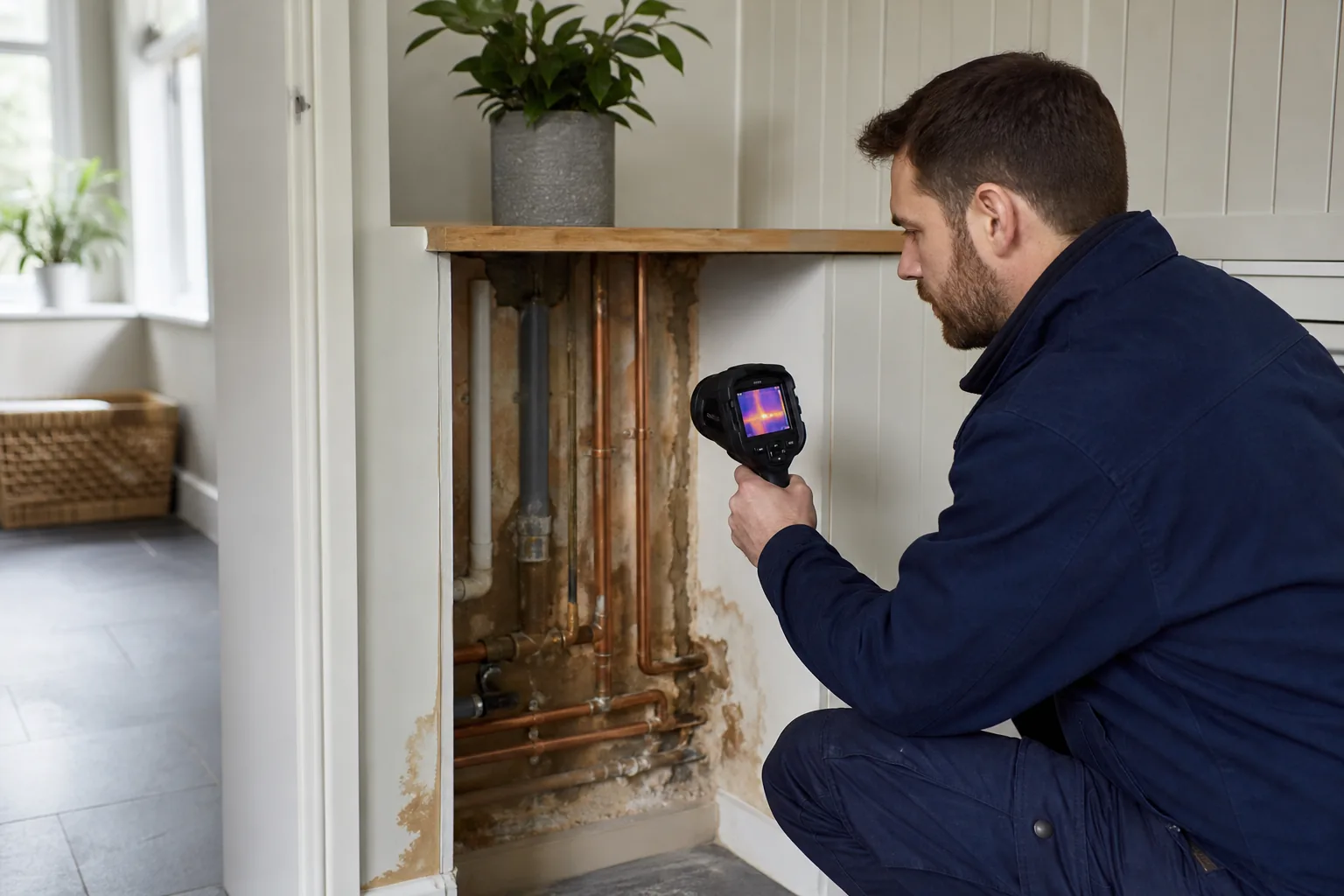
A reliable leak detection visit is not just about replacing the first visible part. The plumber needs to understand when the symptom started, what changed, how the system is supplied and whether the immediate fault has affected anything else.
Problems this service covers
Customers commonly contact us about the following symptoms. If water is uncontrolled, sanitation is unsafe or there is a gas, carbon-monoxide or electrical concern, treat the situation as urgent rather than waiting for an online response.
- Hidden pipe and heating leaks
- Thermal and moisture investigation
- Leak evidence for insurers
- Targeted access and repair planning
Common causes we investigate
The same visible symptom can have several causes. A correct diagnosis helps avoid unnecessary replacement and repeat visits.
Concealed supply or heating pipe leaks
We inspect the related controls, connections and system conditions before recommending the next step.
Failed joints behind finishes
We inspect the related controls, connections and system conditions before recommending the next step.
Cylinder, tank or appliance leaks
We inspect the related controls, connections and system conditions before recommending the next step.
Water travelling from another level
We inspect the related controls, connections and system conditions before recommending the next step.
How the assessment works
- Telephone triageWe establish urgency, address, property type, visible symptoms and whether the water or system can be isolated.
- Site diagnosisThe plumber checks the affected fitting as well as connected pipework, controls, pressure or supply conditions where relevant.
- Options and scopeWe explain the likely cause, access needed, parts, exclusions and whether a temporary make-safe or permanent repair is appropriate.
- Agreed workApproved work is completed with reasonable protection for floors and finishes, then the repaired system is checked.
- AftercareYou receive practical advice on monitoring, maintenance and signs that should trigger a follow-up.
Important decisions before work begins
- Diagnostic evidence and limitations
- Targeted access versus wider opening
- Repair scope after the source is found
- Insurer or property-manager documentation
Homes, apartments and commercial premises
Dublin plumbing varies widely between Georgian buildings, converted houses, modern apartments and suburban family homes. Apartments can involve shared isolation points, management access and water travelling between units. Older homes may have mixed-age pipework or limited access. Commercial properties may need isolation windows, site contacts and job documentation. Tell us about these constraints when booking.
What affects the price?
Cost depends on time of attendance, diagnosis, access, labour, parts, VAT and whether specialist registration or a second visit is needed. Emergency and out-of-hours work generally costs more than a planned appointment. Ask what the initial charge includes, when additional time begins and whether materials are separate. Visit our Dublin plumbing pricing guide for the full checklist.
Keep the work area accessible. If water is escaping, close the internal stop valve only when safe. Photograph visible damage for your records, avoid dismantling specialist equipment and tell the plumber about vulnerable occupants, tenants or neighbouring units.